
Unmasking the "Silent Killer": Dunwill Medical's miRNA7 Supports the "Green Ribbon" Liver Cancer Early Screening Initiative
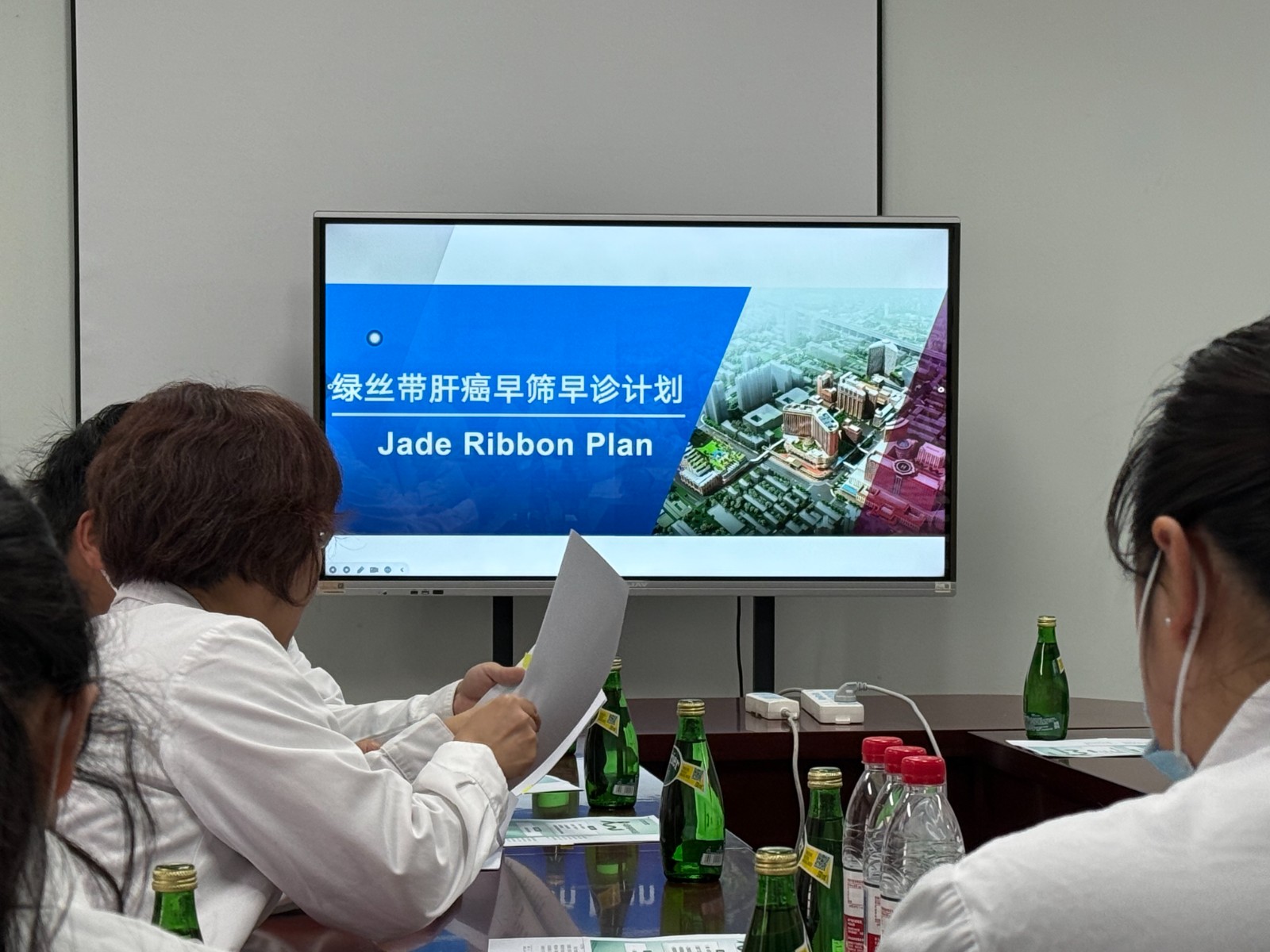
On January 6, 2026, the launch ceremony for the "Green Ribbon Liver Cancer Early Screening and Diagnosis Plan" (the "Green Ribbon Plan") was officially held in Shanghai by Zhongshan Hospital, Fudan University. To further empower early screening and diagnosis of liver cancer, the hospital will provide a complimentary public-benefit screening activity, integrating technological innovation into safeguarding public health. Dunwill Medical's originally developed innovative molecular biomarker for liver cancer early diagnosis—miRNA7—was selected for this plan due to its exceptional performance in detecting very early-stage disease.
The meeting was spearheaded by the Department of Hepatobiliary Oncology and Liver Transplantation Surgery at Zhongshan Hospital, convening a multidisciplinary team including Gastroenterology, Radiology, and Ultrasound to conduct in-depth discussions on the current status and existing models of liver cancer early screening.
Addressing the "Blind Spots" in Traditional Screening
At the launch, Professor Sun Yunfan from the Department of Hepatobiliary Oncology and Liver Transplantation Surgery shared clinical data on various liver cancer screening modalities. The sensitivity of combining Alpha-fetoprotein (AFP) with liver Ultrasound (US) for detecting early-stage hepatocellular carcinoma (HCC) is suboptimal, reaching only 63%[[2]]. Particularly in very early-stage HCC (≤2cm), the sensitivity of AFP alone may be as low as 30%-40%.
In this context, the performance of miRNA7 helps address certain shortcomings of traditional early screening technologies. Based on real-world detection data from over 60,000 individuals, miRNA7 demonstrated a sensitivity of 67.85% for very early-stage HCC (single tumor, diameter ≤2cm), significantly outperforming AFP (41.7%) and DCP (44.5%). Notably, even among very early-stage HCC patients testing negative for both AFP and DCP, miRNA7 maintained a sensitivity of 67.82%. In areas where traditional methods may "fail," miRNA7 provides supplemental diagnostic evidence, potentially securing crucial treatment time for patients while pushing the boundaries of early diagnosis.
From Technological Edge to Inclusive Value
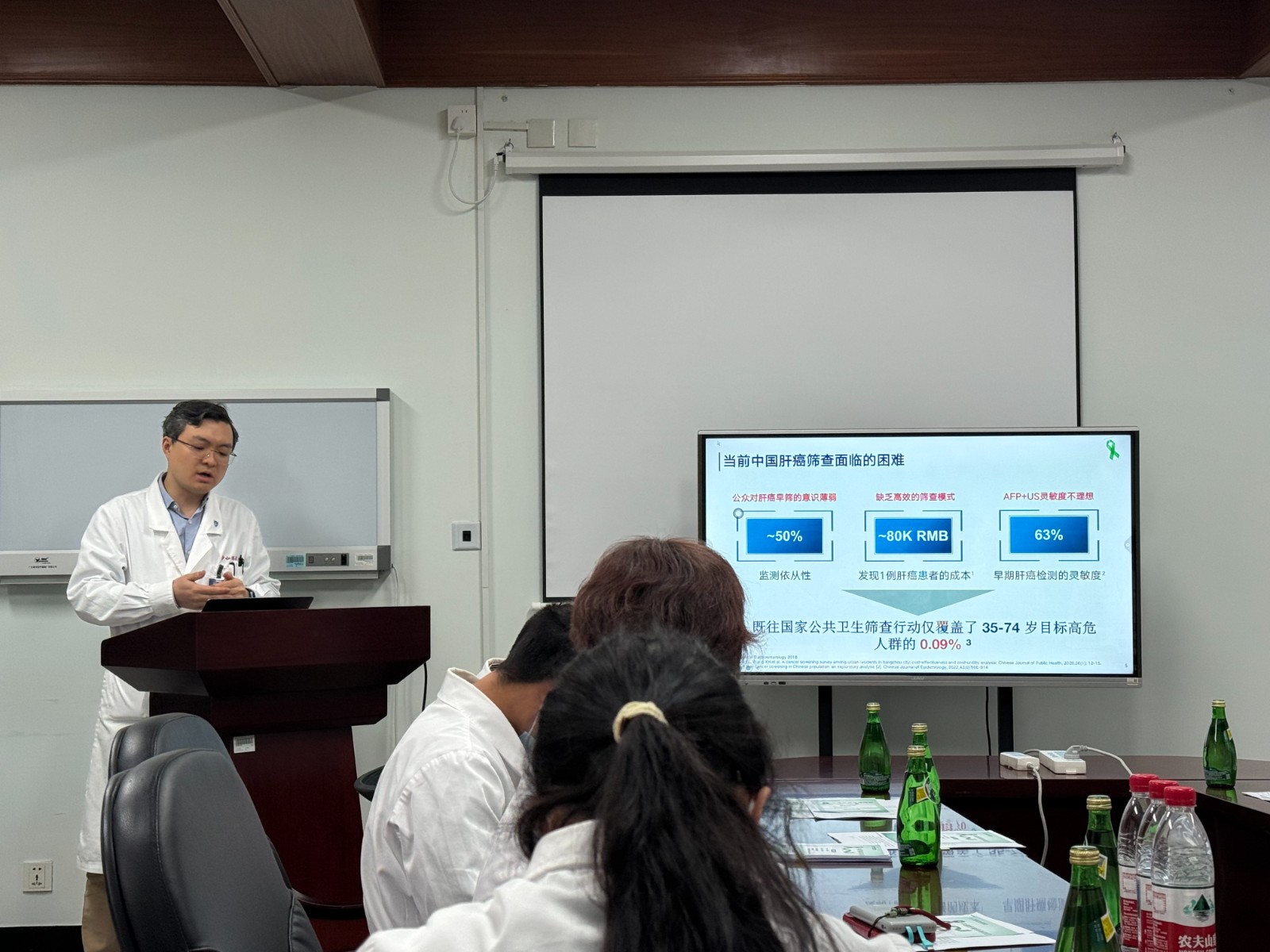
During the conference, Professor Sun also outlined the current challenges in liver cancer prevention and control. Influenced by factors such as low public awareness of early screening, the lack of highly effective screening models, and the suboptimal sensitivity of AFP+US, the incidence and mortality rates of liver cancer remain persistently high. Advancing early screening and diagnosis is therefore a critical measure in combating liver cancer.
Confronting the limitations of current early screening and diagnostic approaches, Zhongshan Hospital has adopted a "traditional screening technology + new technology" model for liver cancer early screening. By incorporating miRNA7 into the process, an optimized "AFP + US + miRNA7" strategy has been formed, with MRI used for further investigation when indicated. Its value lies not only in enhancing the accuracy of individual tests but also in offering new possibilities for constructing a more efficient and cost-effective liver cancer screening model.
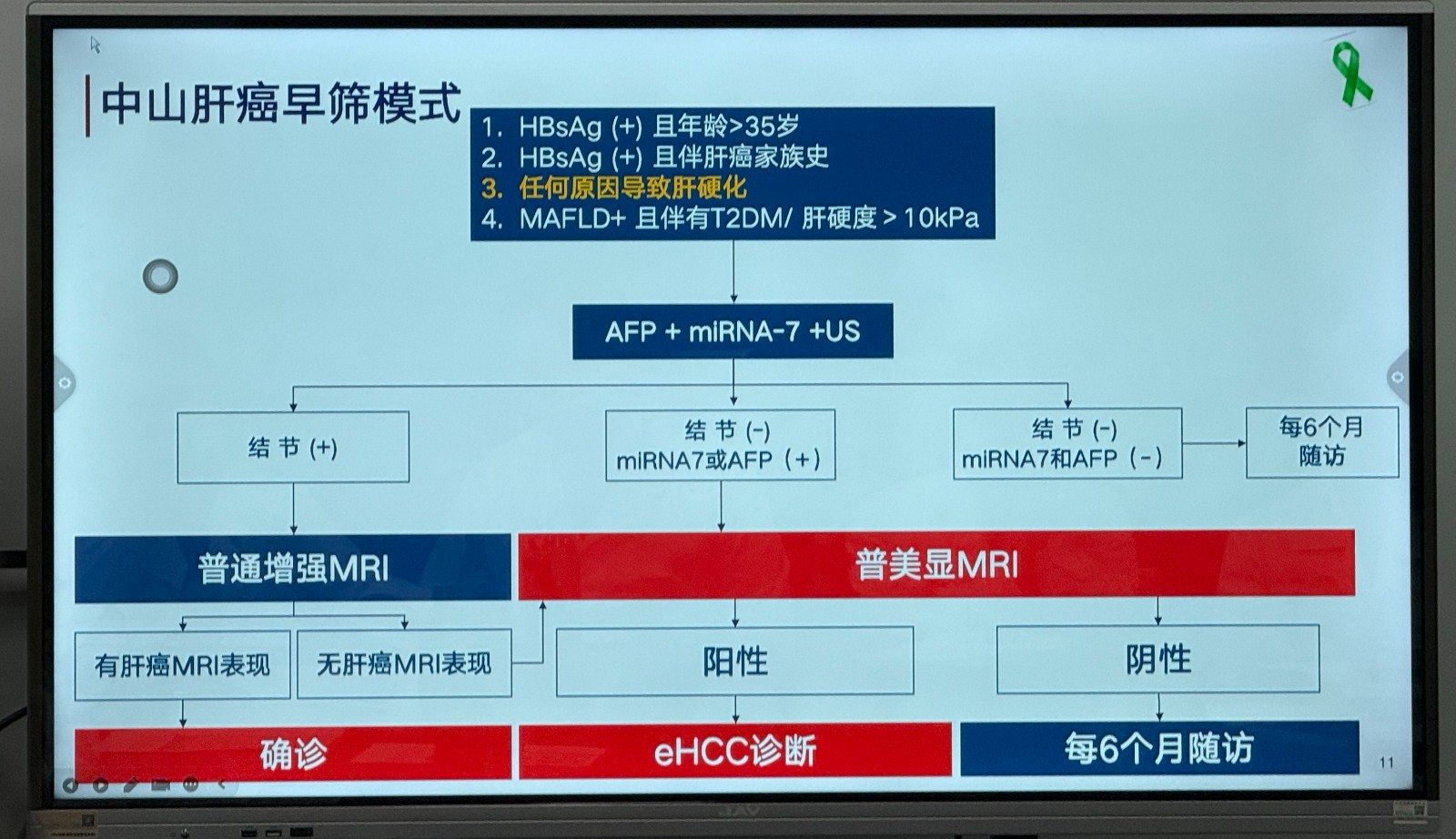
The "AFP+US+miRNA7" early screening model holds promise for more accurate identification of high-risk individuals and better guidance for the "refined screening" stage. This helps avoid both overutilization and underutilization of medical resources, allowing them to benefit a broader screening population. This carries profound inclusive significance for alleviating the burden on patients' families and the healthcare system, and for systematically improving the early diagnosis rate of liver cancer.
The inclusion of miRNA7 in the "Green Ribbon Plan" represents not only an affirmation of Dunwill Medical's long-term commitment to original innovation but also a weighty responsibility. It signifies that miRNA7 technology is transitioning from clinical application towards larger-scale population screening and public health practice.
Liver cancer prevention and control is a systematic project. The initiation of the "Green Ribbon" relies on the forward-looking guidance of the government, the clinical exploration of top-tier hospitals, and the collaborative support of partner enterprises. Dunwill Medical remains committed to its "R&D-driven" core, striving to fulfill its role as an "innovation provider." Together with ecosystem partners, we will continue to integrate more precise and accessible diagnostic solutions into China's network for early liver cancer screening and diagnosis, jointly weaving a stronger safety net for life.
References:
[1] Tzartzeva K, Obi J, Rich NE, et al. Surveillance imaging and alpha fetoprotein for early detection of hepatocellular carcinoma in patients with cirrhosis: a meta-analysis[J]. Gastroenterology, 2018, 154(6):1706-1718 e1.